Deadlock Cheats - Aimbot, Hero ESP & Triggerbot for Valve's MOBA Shooter
Valve's Deadlock blends the strategic lane-pushing of Dota 2 with fast third-person gunfights, creating a competitive loop where mechanical aim and macro decision-making carry equal weight. Deadlock cheats built for this hybrid need to account for both sides of that equation -- raw shooting assistance and information overlays that track abilities, soul economies, and objective timers.
Unlike a pure FPS, every Deadlock match runs through distinct phases: an early laning stage where you farm soul orbs and contest guardians, a mid-game rotation period focused on walkers and jungle camps, and a late-game push toward the enemy Patron. A deadlock hack that only lands headshots misses half the picture. The cheats worth running in this game feed you information at every phase and let you act on it faster than any unassisted player can.
How Deadlock Cheats Work in Valve's MOBA Shooter
Deadlock runs on Valve's Source 2 engine, the same foundation behind Counter-Strike 2. Cheats interact with the game's memory to read entity data -- hero positions, health values, ability states, and projectile trajectories. Because Source 2 handles netcode through a server-authoritative model, most deadlock cheats operate on the client side by interpreting data the server already sends to your machine.
What makes Deadlock hacks distinct from a standard shooter cheat is the volume of relevant data. Each match features 12 players across four lanes, dozens of jungle camps, soul orbs spawning on fixed timers, and six-ability hero kits with individual cooldowns. A well-built cheat suite reads all of this simultaneously and presents it through visual overlays, automated aim corrections, and triggered actions.
The game's MOBA layer also means that information cheats carry more value here than in a standard shooter. Knowing an enemy Bebop has Hook on cooldown or that a McGinnis turret is about to expire changes how you take a fight. Deadlock cheats that surface this data in real time give you a decision-making edge that pure aim assistance cannot replicate.
Cheat Death Deadlock Aimbot - Hero-Specific Targeting and Projectile Prediction
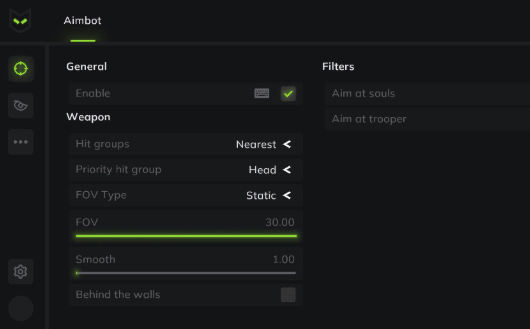
Aimbot in Deadlock handles a wider range of weapon types than most shooters. Heroes like Haze use rapid-fire hitscan weapons where traditional flick-aim correction works well. Others, like Ivy or Paradox, fire slower projectiles that require the aimbot to calculate travel time and lead targets based on their current velocity and direction. A single static aimbot config does not work across the full hero roster.
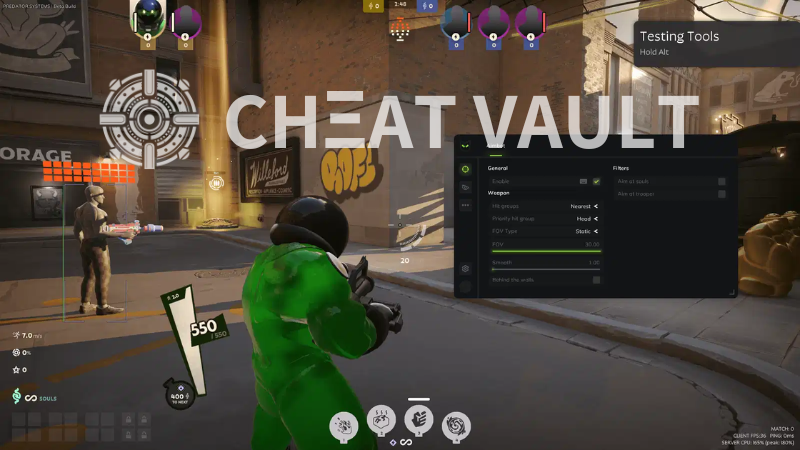
Effective deadlock cheat aimbots let you set per-hero profiles. You can run a tight FOV with head-only targeting on Wraith, whose scoped rifle rewards precision, and then switch to a wider FOV with body targeting on Abrams, who fights at close range and benefits more from consistent damage output than headshot fishing.
Target prioritization adds another layer. During a team fight near a walker, the aimbot should differentiate between a full-health Kelvin body-blocking at the front line and a low-HP Vindicta hovering at the back. Smart priority settings sort targets by health percentage, distance, or threat level -- letting you secure kills on fragile backliners before they can use escape abilities.
Configuring Aimbot for Different Hero Archetypes
Deadlock's heroes fall into rough archetypes that demand different aimbot setups. Long-range carries like Vindicta and Wraith benefit from small FOV values, smooth aim transitions, and headshot-only bone targeting. Their damage output is back-loaded into critical hits, so the aimbot should prioritize accuracy over speed.
Brawlers and tanks -- Abrams, Kelvin, Mo & Krill -- fight inside melee or close-shotgun range. Here, a wider FOV with body or upper-chest targeting keeps damage consistent during chaotic close-range engagements. Smoothing values can be lower because erratic aim at short range is less noticeable to spectators.
Caster-style heroes such as Bebop and Dynamo often rely more on abilities than weapon DPS. Aimbot still matters for finishing targets between cooldowns, but the real value for these heroes comes from triggerbot and ESP integration -- which the sections below cover.
Hero ESP and Soul Tracking in Deadlock
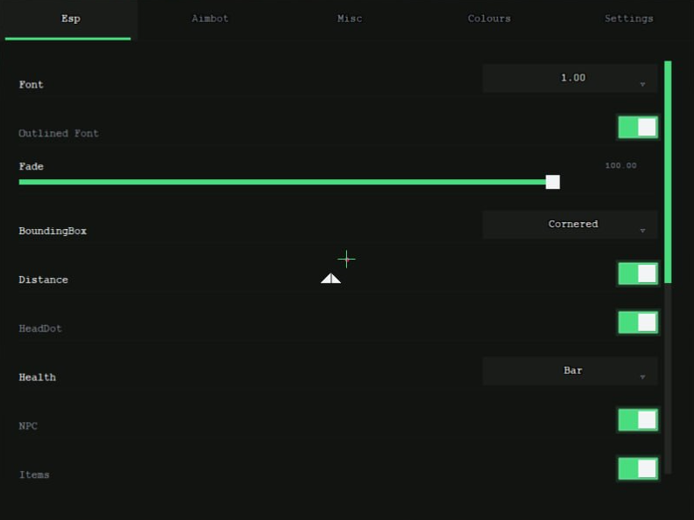
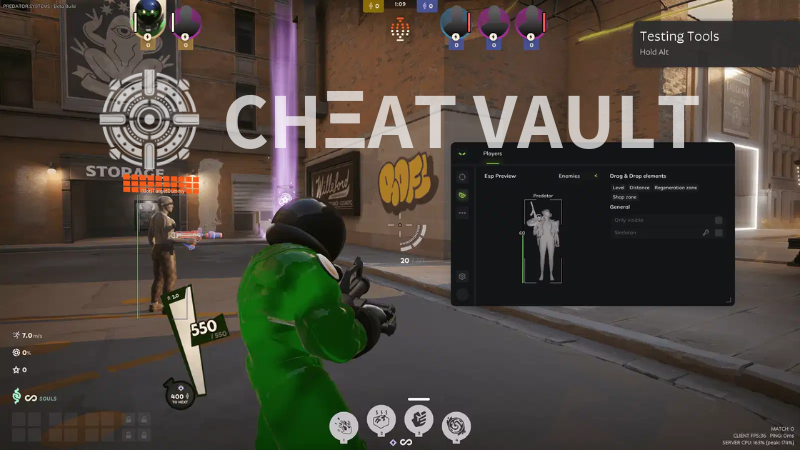
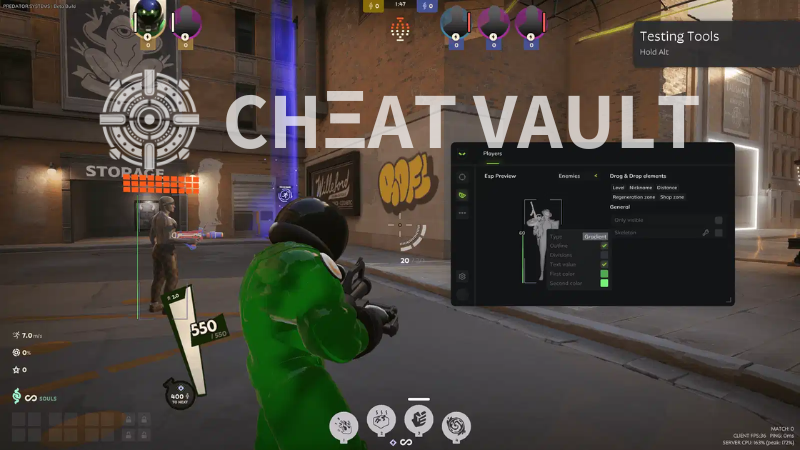
ESP in Deadlock goes well beyond drawing boxes around enemy players. A dedicated deadlock hack with hero ESP displays each opponent's current health, active ability cooldowns, equipped items, and soul count. You see this information through walls, across lanes, and inside the jungle -- removing the fog of war that normally forces you to play cautiously.
Hero-specific data is where ESP becomes a real strategic tool. If you can see that the enemy Pocket just used Barrage and has eight seconds before it comes back, you know the exact window to push. If a Lash has Grapple on cooldown, he has no escape -- you can commit to the kill without worrying about chase potential. This kind of cooldown tracking turns every engagement into an informed decision rather than a coin flip.
Color-coded health bars on the overlay let you identify kill-confirm opportunities at a glance. A red bar on a distant target tells you that a single Wraith ult or Vindicta snipe can close the deal. Without ESP, you would only know that target's health if you had direct line of sight.
Tracking Souls, Jungle Camps, and Objectives
Souls are the economy of Deadlock. Every last-hit on a creep, every soul orb pickup, and every jungle camp clear feeds directly into your item progression. Deadlock cheats with soul tracking show you exactly where uncollected soul orbs sit on the map, which jungle camps are alive, and when they will respawn.
This means you never miss a farm rotation. You can see a Medium Camp respawning in your jungle while you finish pushing a wave, time your rotation perfectly, and pick up an extra 300 souls that an unassisted player would have walked past. Over a 30-minute match, those small efficiencies compound into a one- or two-item lead.
Objective ESP also tracks guardian and walker health in real time. You know the instant an enemy walker drops below a threshold where your team can burst it down, or when a guardian is being solo-pressured by a split-pushing Seven across the map. The Patron itself -- the final base objective -- shows its health and shield status so your team can time the decisive push without face-checking the pit.
Triggerbot for Ability Combos and Gunplay
Triggerbot in a pure shooter fires your weapon the instant your crosshair lands on a valid target. In Deadlock, that concept extends to abilities. A properly scripted triggerbot can detect when an enemy enters the effective range and hit-window for a specific ability, then cast it automatically. Think of Bebop's Hook: the triggerbot waits until a target crosses the hook's hitbox path and fires it with zero human reaction delay.
Chaining abilities with weapon fire is where triggerbot adds the most value. Pocket's Barrage into a full weapon clip, or Lash's Ground Strike timed exactly as a target lands from being flung -- these sequences demand precise timing that a triggerbot executes flawlessly every time. Human players drop these combos under pressure; a triggerbot does not.
Reaction-time settings let you add randomized delay to the triggerbot's activation so that your shots do not fire with inhuman consistency. A delay range of 40 to 120 milliseconds mimics natural human variance and keeps demo reviews and Overwatch-style replays looking legitimate.
Radar Hack and Minimap Enhancements
Deadlock's map is large. Four lanes, interconnected jungle corridors, zip lines, and vertical terrain create rotational complexity that a standard minimap barely captures. A radar hack for deadlock hacks draws every enemy position on an enhanced minimap overlay, giving you a bird's-eye view of all 12 players at once.
Radar is especially useful during the mid-game when teams start rotating between lanes and grouping for objective fights. You can see a three-man gank squad moving through the jungle toward your lane five seconds before they arrive -- enough time to back off to your guardian and avoid a death that would have given the enemy team a massive soul swing.
Some radar implementations also show neutral objectives, zip-line usage, and teleporter activation. This level of map awareness turns you into your team's shot-caller, even if your teammates have no idea where the information is coming from.
Staying Undetected - VAC and Anti-Cheat Considerations
Deadlock runs under Valve Anti-Cheat (VAC), the same system used in CS2 and Team Fortress 2. VAC scans for known cheat signatures in your game process, cross-references loaded modules against a blacklist, and flags accounts for delayed bans. Undetected deadlock cheats avoid detection by operating through external overlays or kernel-level drivers that sit outside the memory space VAC actively monitors.
Signature rotation is critical. When a cheat's binary pattern gets added to VAC's database, every user running that version is flagged. Reputable providers push regular updates that alter the cheat's memory footprint before detection waves roll out. CheatVault's Deadlock hack offerings follow this update cycle to maintain undetected status.
Hardware ID (HWID) bans are another consideration. If your account receives a VAC ban, Valve can tie that ban to your motherboard, GPU, and drive serial numbers. An HWID spoofer randomizes these identifiers so you can create a fresh account and continue playing without carrying the previous ban's fingerprint.
Stream-proof overlays add a practical layer of safety. These rendering modes make the cheat's visual elements invisible in OBS, Discord screen-share, and other capture software. You see the ESP boxes and aimbot FOV circle on your monitor, but anyone watching your stream or recording sees a clean game feed.
FAQ - Deadlock Cheats
What features are included in Deadlock cheats?
A full Deadlock cheat suite typically includes aimbot with per-hero targeting profiles, hero ESP with cooldown and health overlays, triggerbot for weapon fire and ability combos, radar hack for minimap enemy tracking, and soul or objective ESP that monitors orbs, jungle camps, guardians, and walkers.
Are Deadlock hacks detectable by VAC?
Valve Anti-Cheat actively scans for known signatures. Undetected deadlock hacks use external rendering, kernel-level drivers, and frequent signature updates to stay off VAC's blacklist. No cheat is permanently undetectable, but regular updates keep detection risk low.
Can I get hardware banned in Deadlock?
Yes. Valve can issue HWID bans that tie a VAC ban to your hardware identifiers. An HWID spoofer changes your motherboard, GPU, and drive serial numbers so a new account is not linked to a previously banned machine.
Does aimbot work with all Deadlock heroes?
Aimbot functions across the full roster, but configuration matters. Hitscan heroes like Haze and Wraith use standard aim correction, while projectile heroes like Ivy require travel-time prediction. Per-hero profiles let you optimize FOV, bone targeting, and smoothing for each character.
How does ESP help during the laning phase?
During laning, ESP shows your opponent's health, ability cooldowns, and soul count in real time. You can see when they have used a key defensive ability and are vulnerable, time your trades around their cooldown windows, and track soul orbs to ensure you never miss farm.
Is triggerbot useful in a MOBA-shooter like Deadlock?
Triggerbot is highly effective in Deadlock because it handles both weapon fire and ability activation. It can auto-cast crowd control abilities the moment a valid target enters range and chain follow-up damage instantly -- executing combos with zero reaction time.