HWID Spoofer: Undetected Hardware ID Changer & Cleaner
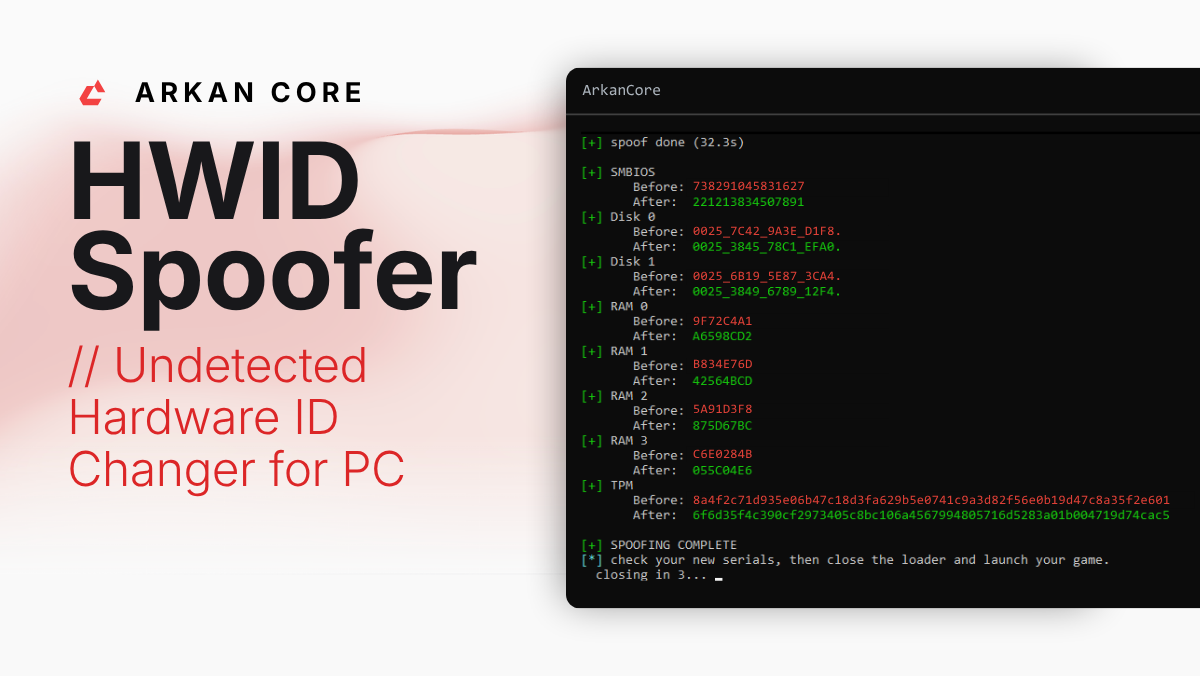
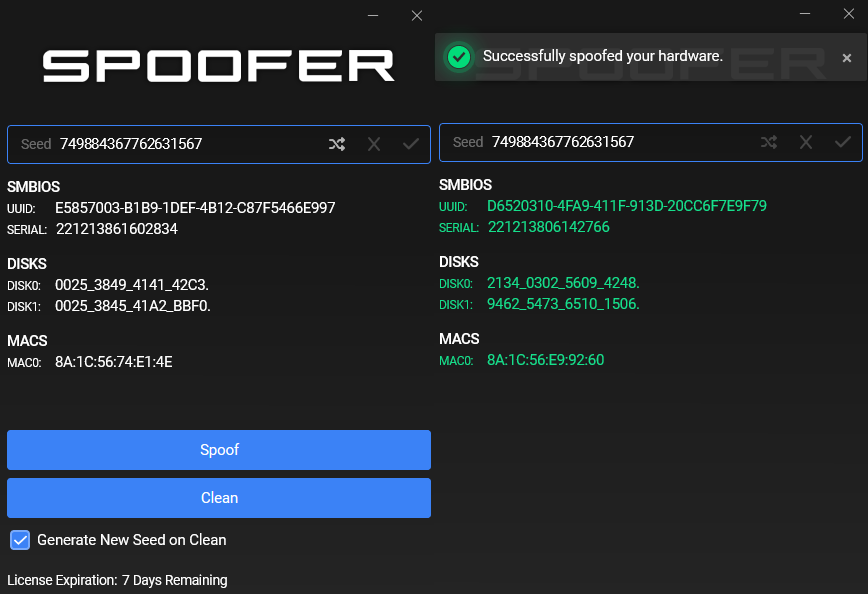
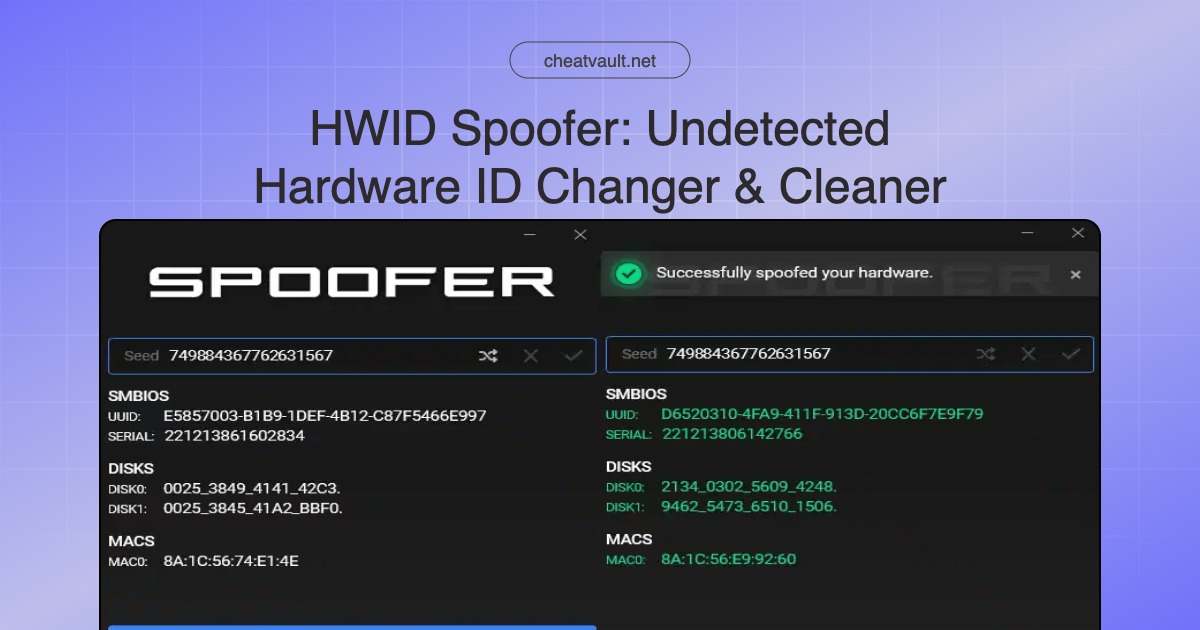
A hardware ban is the one punishment most players never recover from. Unlike account suspensions, a hardware ban ties the restriction to your physical components motherboard, GPU, network adapter, and disk drives all carry unique serial numbers that anti-cheat systems log when you get flagged. An HWID spoofer intercepts those identifiers and presents fake serials, making your machine appear as a different PC.
What Is an HWID Spoofer?
An HWID spoofer modifies or masks the hardware identifiers your operating system reports to applications. Anti-cheat engines like EAC, BattlEye, and Vanguard collect a fingerprint from your CPU ID, motherboard serial, GPU serial, MAC address, and disk volume serials every session. When a player receives a hardware ban, that fingerprint is stored server-side. Any new account on the same machine matches and gets banned automatically.
A hardware spoofer breaks this cycle by generating randomized serials each time you activate the tool.
Hardware Identifiers That Get Flagged
- Motherboard serial and SMBIOS UUID – the primary anchor for most fingerprints
- GPU serial – queried through NVAPI or ADL interfaces
- MAC address – your network adapter's physical address
- Disk drive serials – volume serial and physical drive serial from SMART data
- Monitor EDID – display serials from Extended Display Identification Data
A reliable HWID changer covers all of these. Missing one identifier gives anti-cheat enough data to re-link your machine.
How Hardware Bans Work
The anti-cheat driver collects serial numbers from multiple components and hashes them into a composite identifier stored server-side. When a ban triggers, both the account and hardware hash get flagged. New accounts match on next login and get suspended within minutes. Swapping a single component rarely works because remaining serials produce a partial match strong enough for detection.
Anti-Cheat Systems That Issue Hardware Bans
- EAC – Fortnite, Rust, Apex Legends. Collects disk, motherboard, and network serials. Bans persist across Windows reinstalls.
- BattlEye – PUBG, R6 Siege, Tarkov. Kernel-level driver reading SMBIOS tables.
- Vanguard – Valorant. Ring-0 driver loading at boot, hardest to bypass.
- RICOCHET – Call of Duty titles. Kernel-level with server-side behavioral analysis.
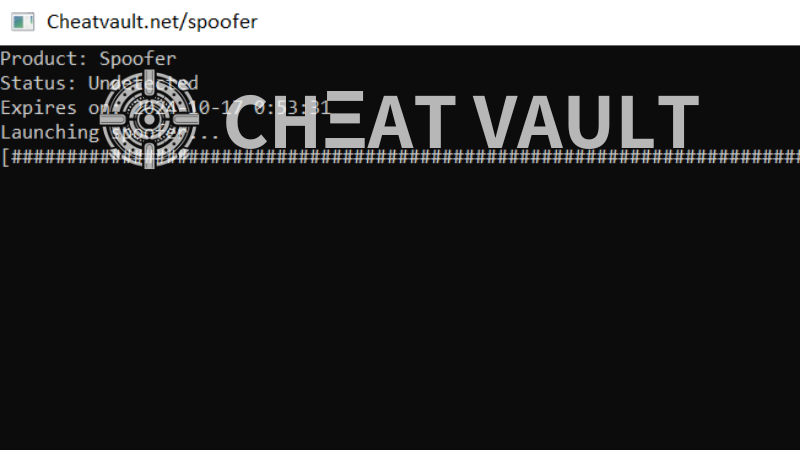
How an HWID Spoofer Changes Your Serials
The HWID spoof hooks into system calls returning hardware identifiers. When anti-cheat queries your motherboard serial through WMI or IOCTL calls, the spoofer intercepts and returns a randomized value.
Kernel-Level vs. User-Level Spoofing
A kernel-level (ring-0) HWID spoofer loads a driver into the Windows kernel, hooking IOCTL dispatch routines and SMBIOS read functions before the anti-cheat initializes. It operates at the same privilege level, intercepting direct hardware queries.
A user-level spoofer modifies only registry values and WMI data from user space. Any ring-0 anti-cheat Vanguard, BattlEye, RICOCHET bypasses user-level hooks and reads real serials. For kernel-level anti-cheat games, only ring-0 hwid spoofers provide protection.
Supported Games and Anti-Cheat Compatibility
A kernel-level HWID spoofer works across all major anti-cheat-protected titles because it spoofs identifiers at the OS level:
- Valorant (Vanguard)
- Rust, Fortnite, Apex Legends (EAC)
- PUBG, R6 Siege, Escape from Tarkov (BattlEye)
- Call of Duty: Warzone, MW3, Black Ops 6 (RICOCHET)
Compatibility depends on the hwid spoofers being updated after each anti-cheat patch.
How to Change Your HWID
- Close all game clients and anti-cheat processes
- Run the HWID spoofer as administrator to load the kernel driver
- Select identifiers to spoof (most tools default to all)
- Activate and verify changed values in Device Manager
- Launch the game on a new account
A clean Windows install before spoofing is recommended. Residual registry traces can contain cached hardware identifiers from the original ban event that may be read before the hwid reset takes effect.
Frequently Asked Questions
What is a spoofer?
A spoofer disguises your computer's hardware identifiers by replacing real serial numbers with random values. It prevents anti-cheat from recognizing your machine after a hardware ban.
What is HWID?
HWID stands for Hardware Identification unique serial numbers from your motherboard, GPU, network adapter, and disk drives. Anti-cheat engines compile these into a fingerprint identifying your machine.
How to change HWID?
Run a dedicated HWID spoofer that hooks into your OS hardware reporting functions. For kernel-level anti-cheat games, use a ring-0 spoofer that loads before the anti-cheat driver.
Does Roblox HWID ban?
Yes. Roblox issues hardware bans for repeated ToS violations. An HWID spoofer covering disk serials and network identifiers is sufficient since Roblox lacks a kernel-level anti-cheat.
Will an HWID spoofer damage my computer?
No. It changes only what your OS reports to applications without modifying hardware or firmware. Real serial numbers stay intact. Uninstalling restores normal reporting.